
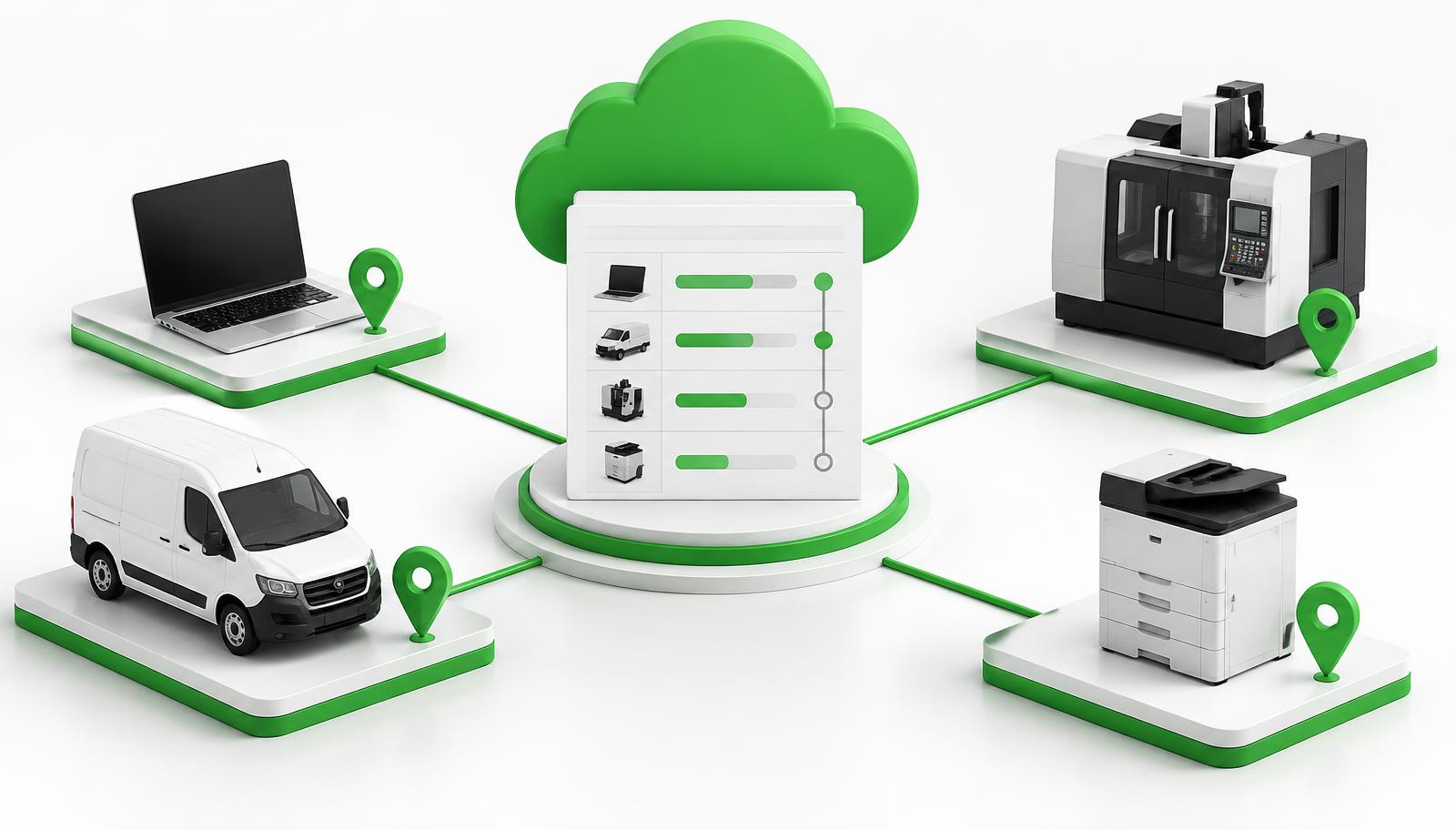
Month-end often reveals the same gap: an equipment invoice is in the general ledger, but the asset was never opened in the register, its location is unconfirmed and depreciation waits for a spreadsheet maintained by one person. Cloud fixed asset management closes that gap by giving purchasing, finance and operations one current source of data.
For a CFO, the question is not merely where the list of laptops, vehicles, machines and office equipment lives. Each asset should show when it was acquired, who uses it, where it is, how it was capitalised, which depreciation rule applies and which document supports its disposal.
A fixed asset register is more than an inventory list
Good records begin before activation. Purchasing must be linked to the supplier, invoice, cost centre, project or dimension and to the decision whether the spend is expensed or capitalised. In Business Central, an asset card can hold code, description, class, subclass, location, custodian, serial number and dimensions.
Data structure alone does not create discipline. Capitalisation policies, value thresholds, useful lives and disposal methods must be defined. The system can automate calculation, but finance still decides whether a repair is a current expense or an increase in asset value.
One connected cloud process
From incoming invoice to activated asset
The process starts with the incoming invoice. Finance decides whether an item is an expense or an asset, assigns the account and dimensions and starts approval when required. Once the purchase is posted, the asset card receives acquisition value and any directly attributable costs. Separate depreciation books can support management and statutory requirements where needed.
Business Central then prepares depreciation proposals according to the configured methods and periods. Finance reviews the amounts before posting. Depreciation is no longer a monthly manual calculation copied into the general ledger, but a controlled process with status and documentation.
Transfers, inventory and disposal without losing the trail
An asset changes location, custodian, value and status during its life. A cloud register records those changes with documents and responsibility. During inventory, operations confirms physical existence while finance sees discrepancies immediately. Sale, retirement or loss records the date, reason, proceeds and accounting effect so the asset card and general ledger remain aligned.
What cloud changes for finance and management
- One current register instead of conflicting files
- Asset value and location reporting by company, project or cost centre
- Role-based access to sensitive financial functions
- A clear audit trail for every change and approval
Where Holy AI accelerates Business Central adjustments
Standard Business Central covers core fixed asset processes, but companies need exceptions: a mandatory contract number, automatic asset class suggestions, approval for disposal above a threshold or reports by custodian. Users can describe the rule in business language; Holy AI analyses it, proposes the logic and prepares AL code for the test environment. The HOLYERP team reviews business rules, code and test scenarios before production.
Preparing the move away from spreadsheets
Clean the existing register before migration. Do not carry duplicate codes, unknown locations, missing acquisition dates and unreconciled values into the new system. Define the mandatory data set, reconcile opening balances to the general ledger, map classes and dimensions, configure depreciation books and roles, then test acquisition, depreciation, transfer and disposal. A clearly scoped implementation starts from 8–12 weeks; poor historical data and specialised processes extend it.
Tell us how you manage fixed assets today. We will help you map a controlled Business Central process without spreadsheet gaps.