
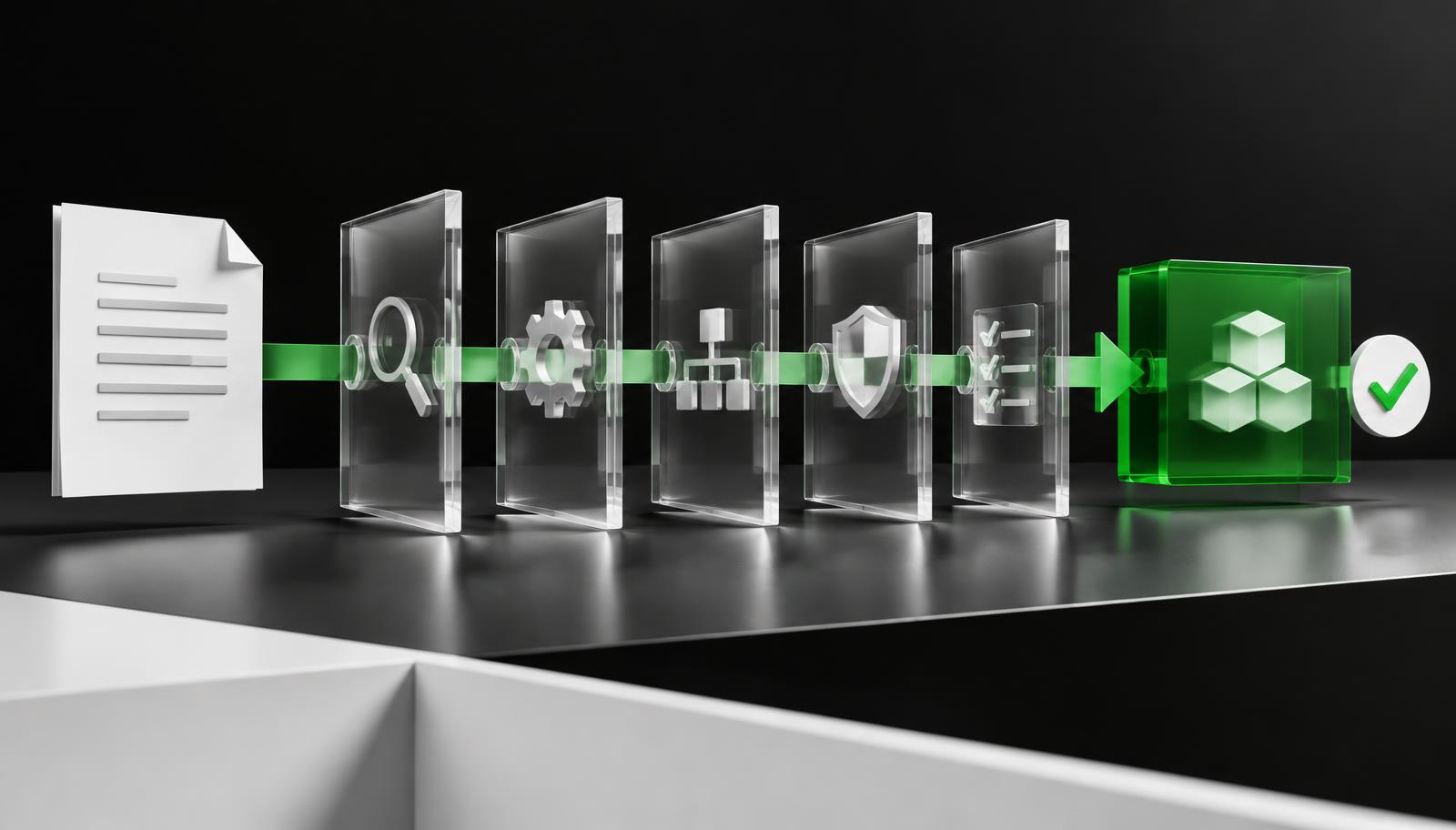
When finance needs a new document field, purchasing wants a different approval path and management needs a report by project and customer, the idea is rarely the problem. The bottleneck begins when a simple requirement turns into weeks of specifications, waiting and costly development. These five benefits show why that model is changing for companies using Microsoft Dynamics 365 Business Central.
AI does not replace process knowledge, consultant accountability or testing. It changes how a requirement becomes a concrete ERP change. A user can describe the need in ordinary language; Holy AI helps analyse it, proposes a solution and prepares the basis for Business Central AL code.
Five benefits in Business Central
1. A business requirement becomes a working change faster
In the traditional model, users explain the need to a consultant, the consultant writes a specification and developers interpret it. Details surface only during testing. AI-assisted development shortens that chain and recognises that an approval request combines rules, roles, document states, notifications and an audit trail — not merely a new button.
The real gain is earlier learning. Teams reach a testable version sooner and can correct limits by currency, company or document type while the business context is still clear.
2. Lower cost for small and medium adjustments
Many useful ERP improvements never reach the roadmap: posting checks, automatic dimensions, budget warnings, project fields or a report joining several tables. Holy AI can reduce the effort for analysis, the first solution draft and routine AL code. That makes the relationship between effort and business value more realistic without pretending every change is simple.
3. A more precise dialogue between business and IT
ERP projects often stall because the same words mean different things. An “approved invoice” may be ready for posting, approved by a manager, accepted from a supplier or complete with supporting evidence. Holy AI can ask clarifying questions before development and turn a broad wish into testable rules.
For incoming invoices, the team must define what happens when price or quantity differs, who may change the proposed account, which dimensions are mandatory and whether posting is allowed without an attachment. These questions distinguish automation that removes work from automation that merely moves errors faster.
4. More consistent quality through proposals, tests and review
AI-generated code is not automatically reliable code. It may be syntactically valid while ignoring locked documents, user permissions or existing extensions. A sound process reviews the solution design and AL code, tests normal and boundary cases, publishes to a test environment and moves to production only after user acceptance and expert sign-off.
HOLYERP combines the speed of Holy AI with consultant review before production. That is the practical answer for CFOs and IT managers who want faster changes without losing control of the financial system.
5. ERP adapts more easily as the business changes
Companies open entities, introduce project accounting, change approval limits and centralise purchasing outside major implementations. Shorter development cycles help Business Central keep pace. But not every idea should become an extension: first check standard setup, workflows, dimensions and existing functionality. Development makes sense where it closes a real process gap.
Where the fastest operational effect appears
- Approval workflows and exception routing
- Automatic data and dimension assignment
- Pre-posting checks and budget warnings
- Document imports and management reports
How to frame the first request
Do not begin with “modernise our ERP”. Choose one process with a manual step, waiting time or recurring errors. State who starts it, which data they enter, which rule the system should check, who handles an exception and what a successful outcome looks like. A few precise sentences are enough to begin a useful analysis.
Describe one Business Central process you want to improve. We will help you turn it into a controlled, testable change.